
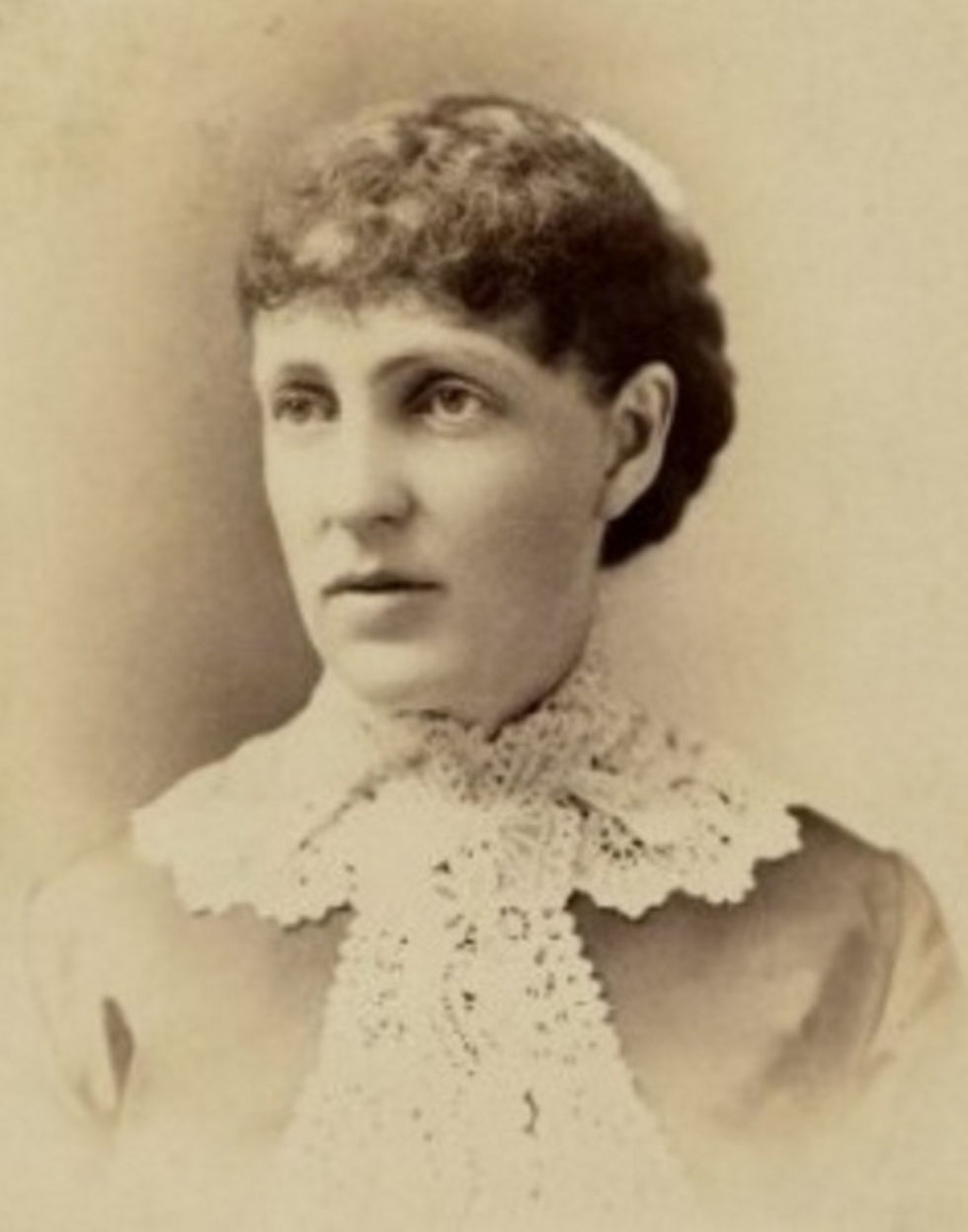
Kate Stoneman
Born on a farm in what is now Lakewood, Kate Stoneman grew from a curious girl with an interest in law into one of New York’s great trailblazers.
Before Lakewood was known as the village we recognize today, it was a rural corner of Chautauqua County—farmland, timber, scattered homes, and the broad presence of the lake. It was here, on the Stoneman family farm in April 1841, that Katherine “Kate” Stoneman was born. No one looking at the farmstead could have known that one of its daughters would someday force the State of New York to rewrite its laws.
Kate was the fifth of eight children in a family that valued books, learning, and public life. Her parents were remembered as unusually open-minded for their time, and the Stoneman household produced an extraordinary number of ambitious sons and daughters. Yet Kate came of age in a world that had already decided what a woman’s life ought to contain—and, just as importantly, what it ought not to contain. Women could not vote. Most professions were closed to them. Their legal identities and economic freedoms were sharply constrained. Advanced study was often dismissed as improper, unnecessary, or even physically dangerous for women.
Somewhere among the few books available in her childhood home was an old volume of law. Kate reportedly read and reread it. The image is an irresistible one: a girl on a western New York farm, turning the pages of a musty legal text that described a system in which she possessed comparatively little power. The law may not yet have made room for Kate Stoneman, but she had already begun making room for the law in her own imagination.
She was still a teenager when Susan B. Anthony spoke at a women’s-rights convention in the Chautauqua County Courthouse in Mayville in 1854. We cannot know precisely what Kate heard or how closely she followed the gathering, but the movement was no distant abstraction. The debate over women’s place in public life was unfolding in her own county, reported in the newspapers and discussed by people around her. Chautauqua County would develop one of New York’s largest political-equality organizations, and Kate’s later life suggests that she absorbed the possibilities of that moment deeply.
In 1864, at a time when simply leaving home to pursue an education required unusual resolve from a young woman, Kate departed for Albany to attend the New York State Normal College. She supported herself in part by working as a copyist for the state reporter of the New York Court of Appeals. Her days placed her between two worlds: the classroom, where women were gradually gaining a foothold as professional educators, and the courts, where the language and machinery of law remained almost entirely the domain of men.
Kate graduated in 1866 and began a teaching career that would last approximately forty years. After teaching briefly at the Glens Falls Seminary, she returned to the institution that had educated her. There she taught subjects including geography, drawing, and penmanship and eventually became a respected figure within the college community. At the time, women were frequently steered away from mathematics, science, and other supposedly strenuous subjects. Kate nevertheless built a serious academic career, becoming an educator at a moment when the very idea of an intellectually independent woman still unsettled much of society.
But teaching was only one part of her life.
Kate became active in the causes that would define her generation’s struggle for reform: women’s suffrage, temperance, and international peace. She helped form the Woman’s Suffrage Society of Albany and served the movement in practical, demanding roles, including as secretary of its Albany organization and treasurer of the state association. She was not simply sympathetic to women’s rights. She learned how reform actually happened—through meetings, correspondence, lobbying, drafting, persuasion, persistence, and an intimate understanding of how legislation moved through government.
That experience would soon become essential.
Kate’s childhood fascination with the law returned when she was appointed executrix of a relative’s estate. The responsibility brought her into direct contact with legal questions, and she began studying in earnest. She used a friend’s private law library and later clerked in the office of Albany attorney Worthington W. Frothingham. She studied around the edges of an already demanding life—after teaching, at night, on weekends, and during summers. She had no traditional path to follow and no assurance that the profession would ever permit her to enter it.
Nevertheless, she prepared for the bar examination.
She passed both its written and oral portions, becoming the first woman to do so in New York. Passing the examination should have established that she was qualified. Instead, when she applied for admission to practice, the court rejected her because she was a woman. The existing law described an eligible applicant as a male citizen, and the judges saw no basis for departing from it. Their objections have survived in a chillingly concise form:
“No precedent, no English precedent, no necessity.”
Those words reveal the obstacle Kate faced more clearly than any long explanation could. She was not rejected for ignorance, incompetence, or lack of discipline. She had already demonstrated that she could meet the professional standard. She was rejected because the legal system did not consider a woman lawyer necessary.
Many people would have understood that decision as final. Kate understood it as a problem to be solved.
She and her allies immediately turned to the legislature. A measure removing sex as a barrier to admission had stalled, but Kate knew the suffrage network, understood the legislative process, and could mobilize support. The bill moved through the Assembly and Senate and was signed by Governor David B. Hill. The new provision declared that neither race nor sex could be used as a reason to refuse an otherwise qualified person admission to practice in New York’s courts.
On May 22, 1886—only days after the law changed—Kate Stoneman renewed her application. This time, the court admitted her. At age forty-five, the girl who had once studied an old law book on a Lakewood farm became the first woman authorized to practice law in the State of New York. The legislation she helped secure did more than open the door for her personally: it removed both racial and sex-based barriers from the state’s admission law.
News of the victory spread far beyond Albany. Congratulatory telegrams arrived from around the country. Women who had watched professional doors remain closed saw in Kate’s success evidence that those doors could be forced open—not through permission graciously offered, but through qualification, organization, and legal change.
Remarkably, admission to the bar did not satisfy Kate’s desire for formal legal education. In 1896, more than a decade after becoming a lawyer and while still maintaining her teaching career, she enrolled at Albany Law School. On June 2, 1898, at the age of fifty-seven, she became the first woman to graduate from the school and the first woman to earn a bachelor’s degree from any department of Union University.
Her story is sometimes reduced to a series of firsts, and they are undeniably impressive: the first woman to pass New York’s bar examination, the first woman admitted to practice law in the state, and Albany Law School’s first female graduate. But those achievements can obscure the long, patient life surrounding them. Kate spent decades teaching. She continued advocating for suffrage, education, temperance, and peace. She contributed the organizational labor that sustained reform movements long before their victories appeared inevitable. The available evidence does not establish that she maintained a large or especially active legal practice; her greater influence lay in changing who could enter the profession at all.
In 1917, New York voters approved woman suffrage. The following year, Kate served as a poll watcher in Albany and witnessed New York women cast ballots for the first time. Two years later, the Nineteenth Amendment extended voting rights to women nationwide. She had lived long enough to see a cause once treated as radical become part of the constitutional order.
Looking back on the transformation, Kate confessed that she could hardly believe it was the same world. Everything, she said, seemed to have changed so greatly that it was as though the minds of the universe had been “taken out to air.” The observation sounds almost whimsical, but it carries the wonder of someone who had spent a lifetime pushing against the boundaries of what society considered possible—and then watched many of those boundaries begin to give way.
Kate Stoneman died in Albany on May 19, 1925, at the age of eighty-four, and was buried in Albany Rural Cemetery. In 2009, she was inducted into the National Women’s Hall of Fame. Albany Law School continues to honor her through Kate Stoneman Day, awards, scholarship, and programs recognizing people who expand opportunities for women in the law.
Yet her story also belongs here.
Before the courtrooms and legislative chambers, before the examination and the historic bill, there was a child on a farm in what is now Lakewood. Her hometown did not provide a direct road into the legal profession; no such road existed for a woman born in 1841. Kate had to help build it herself.
The photographs and objects in this collection bring us closer to the person behind the achievement: not a distant name carved into legal history, but a daughter of this landscape—a teacher who studied after dark, a reformer who understood how to turn outrage into action, and a woman who met the declaration that there was “no necessity” for someone like her with a life that proved otherwise.
Kate Stoneman did not merely enter a profession. She changed the law so that other women could follow her through the door. And that extraordinary journey began here, beside the lake.


